
Llama 4 vs NVIDIA Nemotron
Nemotron emphasizes NVIDIA post-training and agentic deployment profiles (Nano/Super/Ultra and NIM pathways), while Llama 4 is a separate Meta model…
This comparison covers pricing, capabilities, and the best-fit use cases for each tool — so you can shortlist faster.
At a glance
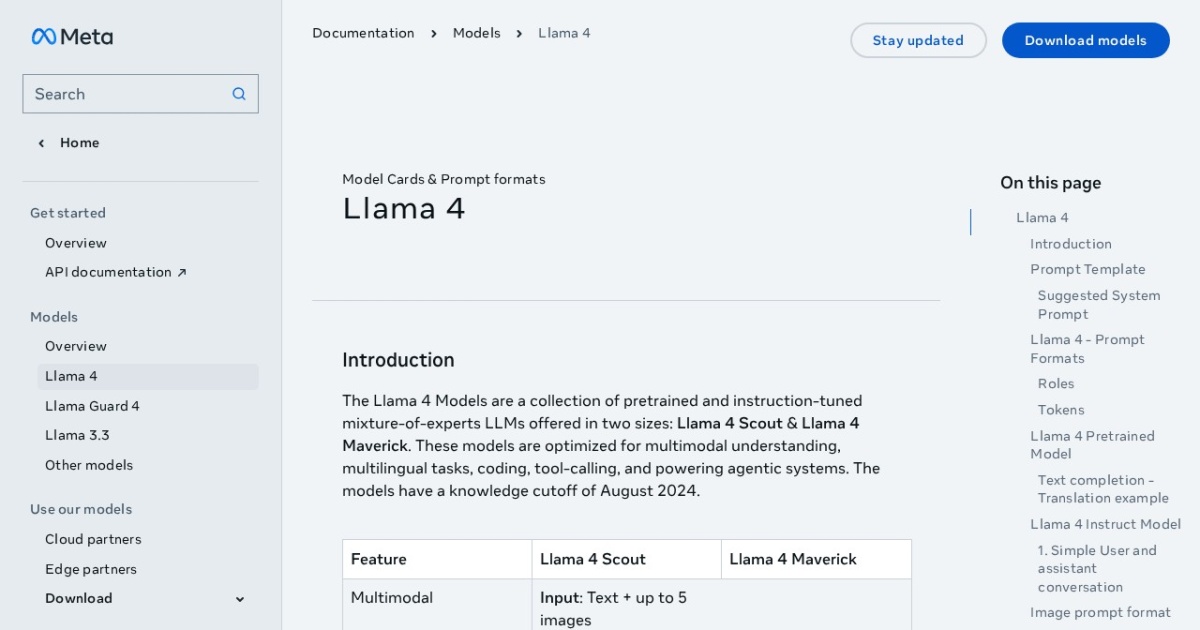
Llama 4
Open-weight multimodal family with massive context, but significant policy and license constraints.
Llama 4 offers headline-grabbing context scale and multimodal capabilities, but it is not a permissive open-source license profile. Solopreneurs should treat it as a high-power option that comes with compliance review and higher infrastructure expectations.
NVIDIA Nemotron
Open model family for agentic AI with reasoning-focused releases across edge, single-GPU, and multi-GPU tiers.
NVIDIA Nemotron is relevant when you need open model options for agentic and reasoning workflows with strong ecosystem support across local runtimes, cloud inference providers, and enterprise deployment stacks.
Side-by-side comparison
| Dimension | Llama 4 | NVIDIA Nemotron |
|---|---|---|
| Pricing model | Free | Free |
| Price range | Free (open weights) | Free open models + optional hosted inference cost |
| API cost | No required vendor API cost for local/self-hosted use. | No required vendor API cost for local/self-hosted use; hosted NIM/provider endpoints are usage-based. |
| Subscription cost | No mandatory subscription for base model access. | No mandatory subscription for base open-model access. |
| Pros | • Very large context windows for repository- and corpus-level tasks • Multimodal support for text and image understanding • Open weights allow tailored deployment patterns • Useful for advanced internal experimentation | • Strong focus on reasoning and agentic workloads • Open model access with broad deployment flexibility • Multiple size targets for edge, single-GPU, and multi-GPU stacks • Good fit for teams evaluating NVIDIA-centered AI infrastructure |
| Cons | • License includes attribution and derivative naming obligations • Additional licensing conditions can trigger at very large scale • Policy constraints can limit usage in specific jurisdictions • Infrastructure costs are high compared with smaller local models | • Best performance often assumes modern NVIDIA hardware • Model naming and lineup evolve quickly, requiring active tracking • Hosted inference cost and behavior vary by provider |
| Best for | • Large multi-document summarization pipelines • Multimodal internal analysis workflows • Teams that can manage license and compliance overhead | • Agentic AI prototyping • Reasoning-heavy developer workflows • Teams balancing self-hosted and managed inference paths |
Key difference
NVIDIA Nemotron's perspective: Nemotron emphasizes NVIDIA post-training and agentic deployment profiles (Nano/Super/Ultra and NIM pathways), while Llama 4 is a separate Meta model family with different licensing and ecosystem tradeoffs.
When to pick each
Pick Llama 4 when
- Large multi-document summarization pipelines
- Multimodal internal analysis workflows
- Teams that can manage license and compliance overhead
Pick NVIDIA Nemotron when
- Agentic AI prototyping
- Reasoning-heavy developer workflows
- Teams balancing self-hosted and managed inference paths