
Kimi K vs Kimi K2.6
Kimi K is the older text-first K2 branch; Kimi K2.6 is newer, multimodal, and much more focused on long-horizon coding and agent workflows.
This comparison covers pricing, capabilities, and the best-fit use cases for each tool — so you can shortlist faster.
At a glance
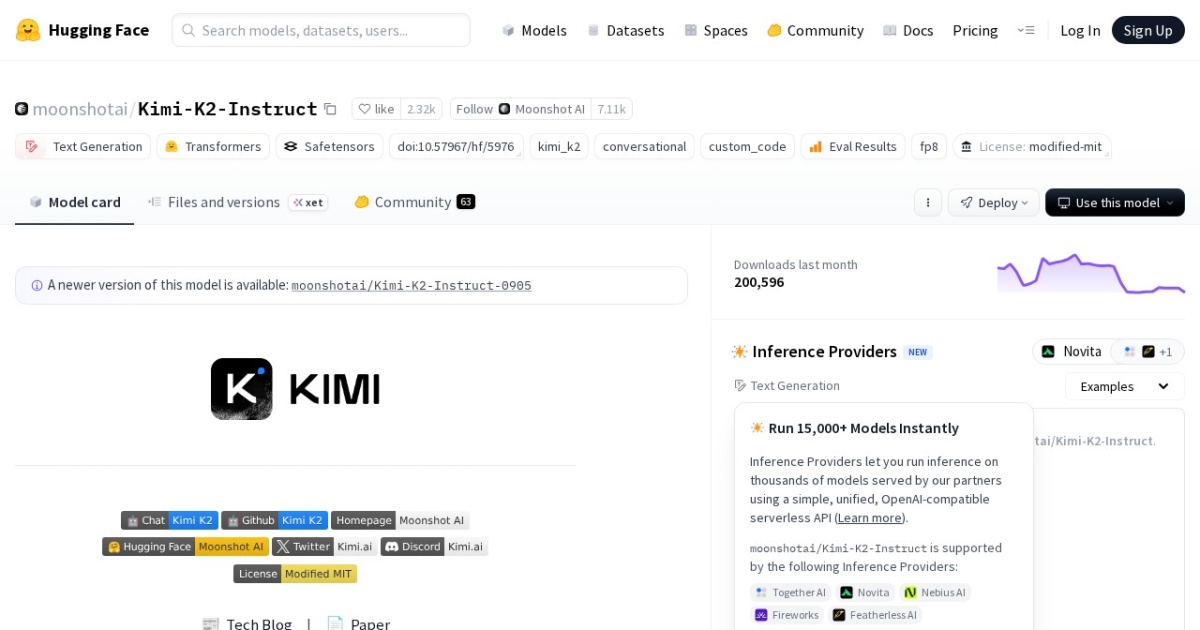
Kimi K
Earlier open-weight Kimi branch for long-context reasoning and local LLM experimentation.
Kimi K refers here to the older K2 open-weight branch, before Moonshot expanded the line into the newer Kimi K2.6 multimodal and more deeply agentic release.
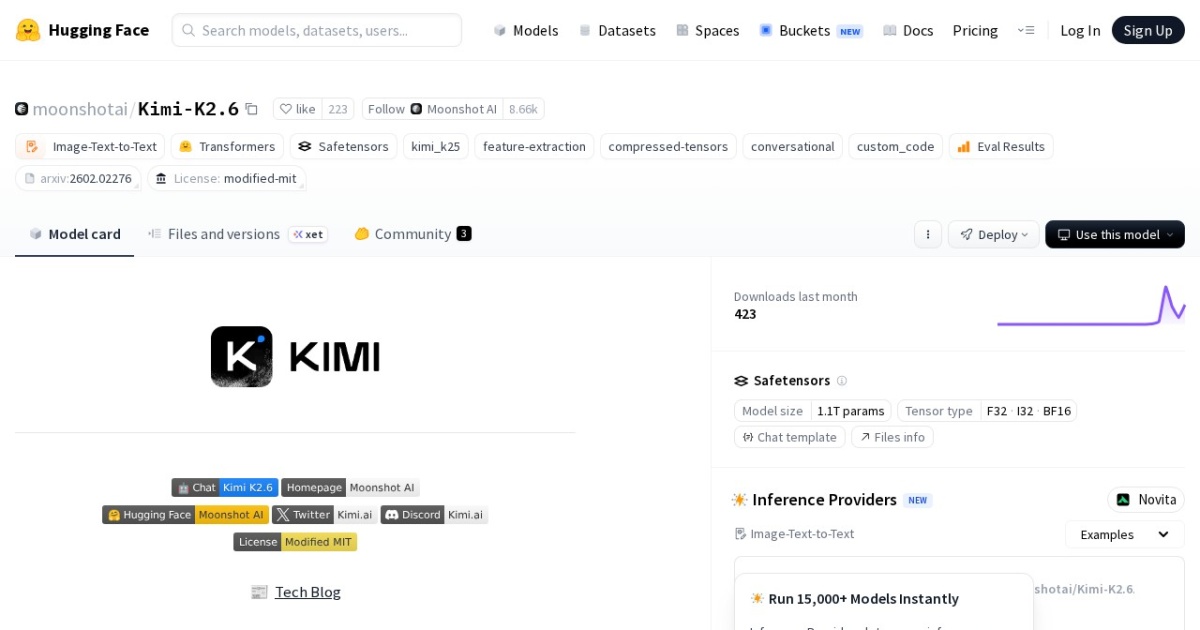
Kimi K2.6
Latest open-weight Kimi model for long-horizon coding, agent swarms, multimodal execution, and large-context local experimentation.
Kimi K2.6 is Moonshot AI's latest open-weight Kimi release. Compared with the older K2 branch, it adds native multimodal support, stronger long-horizon coding behavior, better proactive agent execution, and a much more ambitious agent-swarm story. It is the Kimi line to compare if you care about coding agents, GUI-aware workflows, and large autonomous task chains rather than simple local chat.
Side-by-side comparison
| Dimension | Kimi K | Kimi K2.6 |
|---|---|---|
| Pricing model | Free | Free |
| Price range | Free (open weights) | Free (open weights) |
| API cost | No required vendor API cost for local/self-hosted use. | No required vendor API cost for local/self-hosted use; Moonshot also offers hosted API access if you prefer managed deployment. |
| Subscription cost | No mandatory subscription for base model access. | No mandatory subscription for base model access. |
| Pros | • Good fit for private long-context local workflows • Open-weight path enables deeper customization • Works with common self-hosted inference tooling | • Stronger long-horizon coding and agentic execution than the older Kimi K branch • Native multimodal support for screenshots, UI work, and visually grounded tasks • Open-weight path still allows private self-hosted experimentation |
| Cons | • Requires technical setup for serving and monitoring • Quality varies by deployment tuning and prompt discipline • License and policy checks are still required before commercial rollout | • Very large model family with demanding deployment requirements • Commercial use still needs license and policy review • Newer agentic workflows need careful evals before production automation |
| Best for | • Local long-context drafting and analysis • Builders comparing open-weight LLM stacks • Privacy-sensitive solopreneur research workflows | • Local agentic coding workflows • Multimodal local assistant builds • High-context planning workflows |
Key difference
Kimi K's perspective: Kimi K is the older text-first K2 branch; Kimi K2.6 is newer, multimodal, and much more focused on long-horizon coding and agent workflows.
Kimi K2.6's perspective: Kimi K2.6 is a newer native multimodal and agentic release with 256K context and stronger coding execution, while Kimi K is the older text-first open-weight branch.
When to pick each
Pick Kimi K when
- Local long-context drafting and analysis
- Builders comparing open-weight LLM stacks
- Privacy-sensitive solopreneur research workflows
Pick Kimi K2.6 when
- Local agentic coding workflows
- Multimodal local assistant builds
- High-context planning workflows